
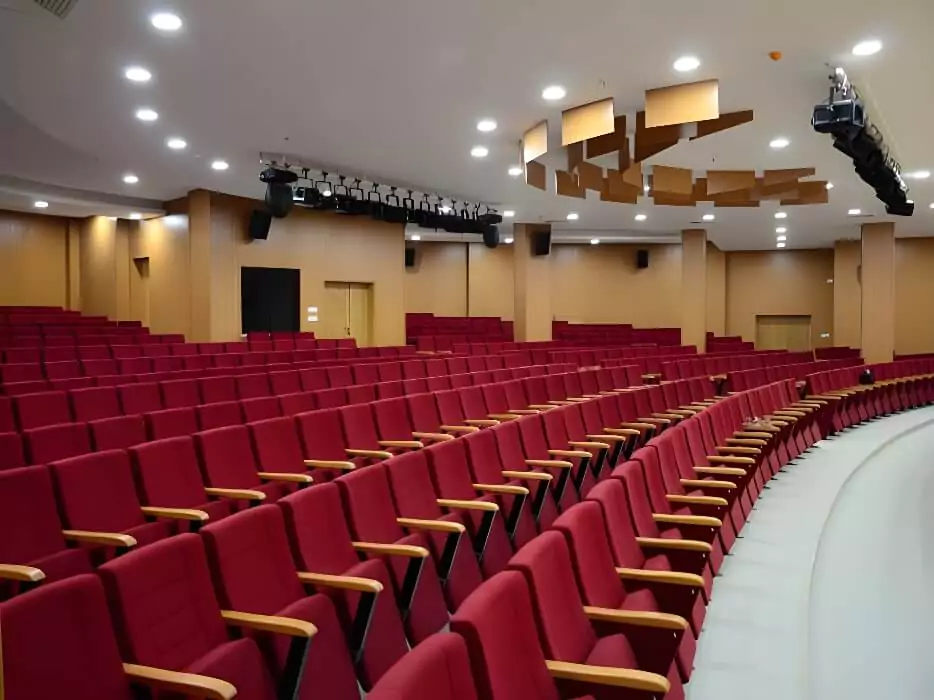
Conference Seats From Turkey
A conference seat is not a simple chair placed in front of a stage. It is part of how people listen, learn, focus, take notes and experience a professional venue. In a conference hall, the audience may stay seated for hours. If the seat is uncomfortable, noisy, too narrow or badly arranged, the quality of the entire event becomes weaker.
Turkey has become an important production base for professional conference seating because it offers manufacturing flexibility, project experience and a strong balance between quality and price. Conference halls, auditoriums, universities, training centers, municipal venues, cultural centers and corporate meeting spaces need seats that are comfortable, durable, practical and suitable for long-term use.
A good conference seat from Turkey should not be selected only by model appearance or unit price. Seat dimensions, foam quality, upholstery, writing tablet options, armrest structure, folding mechanism, row spacing, sightlines, mounting details and cleaning routines should all be evaluated together. The right product supports the user, protects the room’s professional identity and reduces long-term maintenance problems.
Why Turkey Is Strong in Conference Seating
Turkey offers a practical advantage for international conference seating projects because it combines production capacity with customization flexibility. Many projects require different upholstery colors, writing tablet options, wooden details, plastic outer backs, special dimensions, numbering systems or project-based packaging. Manufacturer-based production can respond to these requirements more easily than standard stock-based supply.
For projects in Europe, the Middle East, the Gulf region, Africa and nearby markets, Turkish production can also support competitive logistics and clear project coordination. This matters especially when a venue needs hundreds of seats with the same finish, the same comfort level and the same installation logic.
A conference seat manufacturer in Turkey should understand both the product and the room. The best result comes when the seat is produced according to the real use of the hall.
Conference Seating Starts With the Event Type
Not every conference room needs the same seat. A corporate presentation hall, a university lecture room, a municipal auditorium and a training center all have different expectations.
A corporate hall may need refined upholstery, clean lines and a serious appearance. A training room may need writing tablets and strong daily-use durability. A university lecture hall may require compact seating with practical writing surfaces. A cultural center may need a more elegant model that can also support ceremonies and public programs.
This is why the first question should not be “Which seat is cheapest?” The first question should be “What will happen in this room most often?”
Comfort Without Losing Focus
Conference seats should be comfortable, but not too relaxed. A conference hall is not a cinema lounge. The seat should support attention, posture and long listening sessions.
Balanced comfort depends on seat depth, backrest angle, foam density, armrest height and row spacing. If the seat is too hard, users become tired. If it is too soft, posture support becomes weaker. If the row spacing is too narrow, the user feels restricted.
A well-designed conference seat helps the audience stay focused without constantly noticing the seat.
Writing Tablet Seats
Writing tablet conference seats are useful in seminar rooms, training halls, universities and educational auditoriums. They allow users to take notes, place documents or use tablets without requiring fixed desks.
The quality of the writing tablet is very important. It should be stable, practical and positioned naturally. A small or weak tablet can reduce the usability of the whole room. The opening and closing movement should also be reliable, especially in halls used frequently.
Anti-panic tablet systems can be considered where users need easier row access. These systems help the tablet move out of the way when the user stands, improving movement inside the row.
Auditorium Conference Seats
Auditorium conference seats are used in larger halls where events may include lectures, panels, ceremonies, speeches, presentations and cultural programs. These spaces require a balance between comfort, visual quality and durability.
Auditorium seats may include wooden armrests, fully upholstered backs, plastic outer backs, folding seat pans, writing tablets and numbering systems. The correct configuration depends on whether the hall is more focused on education, corporate meetings, public events or multipurpose use.
In auditorium projects, the seat should work with the architecture. Floor slope, stage position, screen height and aisle layout all affect the final seating decision.
Seminar and Training Room Seats
Seminar and training rooms usually require practical seating. Users may need to write, follow slides, participate in workshops or sit for long sessions. The room must stay organized and easy to manage.
Durable upholstery, stable writing tablets, strong armrests and easy cleaning are important in these spaces. If the hall is used daily, material quality becomes even more critical. A weak seat may look acceptable at installation but lose its shape, loosen or wear quickly under repeated use.
Training room seats should support active learning, not only passive listening.
Wooden Detail Conference Seats
Wooden details can make a conference hall feel warmer, more architectural and more prestigious. Wooden armrests, wooden outer backs or side details can be especially suitable for auditoriums, cultural centers, municipal halls and formal meeting spaces.
Wood should be selected with the room design in mind. Dark wood can create a more formal appearance. Lighter wood can support a modern and natural atmosphere. The finish should work with the flooring, wall panels, stage and lighting.
Wooden details should also be durable. In public venues, armrests and visible surfaces are touched frequently, so surface resistance and clean finishing matter.
Plastic Outer Back Seats
Plastic outer back conference seats are practical for high-use halls. The rear side of the seat is exposed to contact from people moving between rows. A plastic outer back can make cleaning easier and protect the seat from visible wear.
This solution can be suitable for universities, training centers, municipal venues and public auditoriums. The user-facing side can remain upholstered for comfort, while the back side becomes more durable and easier to maintain.
Plastic outer backs should still look professional. Good material quality and clean design are essential.
Upholstery and Color Selection
Upholstery affects comfort, appearance, acoustic behavior and cleaning. Fabric, artificial leather and special upholstery materials can be selected according to the project.
Fabric can create a warmer and more formal atmosphere. Artificial leather may be practical where easy cleaning is important. The correct choice depends on usage intensity, maintenance routine and design target.
Color should support the hall identity. Anthracite, dark grey, navy, black, burgundy and brown tones can create a serious conference atmosphere. In modern corporate interiors, softer neutral tones may also work well. The selected upholstery should resist wear and keep its color over time.
Foam Quality and Long-Term Shape
Foam quality is one of the most important hidden factors in conference seating. A seat may look good at first, but weak foam can collapse and lose support after repeated use.
Conference halls often host long events. Users need stable support throughout the session. The seat cushion and backrest should provide balanced comfort without becoming too soft or too rigid.
Foam also affects the visual order of the room. Seats with collapsed cushions make a hall look old, even if the rest of the interior is still clean.
Silent Mechanisms
Conference halls need quiet seating. A noisy folding seat pan, loose armrest or unstable writing tablet can disturb presentations and weaken the professional atmosphere.
The folding mechanism should move smoothly and close in a controlled way. Writing tablet mechanisms should feel stable and reliable. In formal halls, even small noises can become noticeable.
Silent use is not a luxury detail. It is part of professional conference seating quality.
Row Spacing and Capacity
Row spacing affects both comfort and capacity. A hall with too little row distance may look efficient on paper, but users will feel restricted. Movement becomes difficult, and writing tablet use can become uncomfortable.
Standard conference seats may allow more efficient layouts. Writing tablet models may need more space. VIP or executive areas may require wider spacing. The correct plan depends on the purpose of the hall.
A successful conference seating layout protects capacity without sacrificing real comfort.
Sightlines and Screen View
Every conference seat should allow a clear view of the speaker, stage, screen or presentation area. If users must lean or turn constantly, the room becomes tiring.
Sightlines depend on floor slope, row height, backrest form, screen position and stage level. In renovation projects, existing floor conditions may limit options. In new projects, seating should be planned early so the room structure supports clear visibility.
Good sightlines make every row more valuable.
Mounting and Installation
A well-produced conference seat can still perform poorly if it is installed incorrectly. Mounting surface, floor slope, fixing points, row alignment and aisle distances must be checked before installation.
Conference and auditorium seats may be installed on flat floors, stepped floors or sloped surfaces. Each condition requires a proper fixing method. Incorrect installation can cause noise, misalignment, instability or long-term maintenance problems.
Professional installation protects the appearance, comfort and safety of the hall.
Renovation Projects
Many conference seat projects from Turkey are renovation projects. Old halls may have worn upholstery, collapsed foam, outdated colors, noisy mechanisms or unsuitable seating layouts.
Before renovation, existing row spacing, floor slope, mounting holes, stage position and capacity should be reviewed. The new seat should fit the current structure without unnecessary construction work.
A renovation can also include new upholstery colors, writing tablet additions, improved numbering, VIP rows or a more modern visual identity.
New Conference Hall Projects
In new conference projects, seating should be planned early. Seat type affects floor design, aisle layout, screen visibility, acoustic treatment, lighting and capacity.
If the seat is selected too late, the architecture may not support the preferred model. Writing tablet seats, auditorium chairs and VIP conference seats each require different planning.
Early coordination helps protect budget, comfort and long-term usability.
International Project Supply
Conference seating from Turkey can serve projects across Europe, the Gulf region, the Middle East, Africa and other international markets. Each region may have different expectations for design, durability, delivery and price-performance balance.
International projects require clear communication, consistent production, proper packing and project-based coordination. Large quantities should arrive organized and ready for installation. If the project includes different halls or different seat types, labeling and production consistency become even more important.
A manufacturer-based approach helps reduce confusion and creates a more controlled project process.
Quality and Price Balance
Conference seats should not be selected only by the lowest price. A low-cost seat can become expensive if it creates early upholstery wear, foam collapse, mechanism noise, loose armrests or replacement needs.
The correct approach is to evaluate price together with comfort, durability, maintenance, installation and project suitability. In large halls, small quality differences become more visible and more expensive over time.
A strong quality-price balance is one of the main reasons many project teams consider conference seating from Turkey.
Conference Seat Categories
Professional conference seating projects may include standard conference seats, auditorium seats, seminar seats, training room seats, lecture hall seats, writing tablet seats, anti-panic tablet models, folding seats, upholstered seats, wooden detail seats, plastic outer back models and VIP conference seats.
Each category serves a different purpose. The right choice depends on room type, session length, writing needs, usage frequency, design target, maintenance routine and budget.
Conclusion
Conference seats from Turkey can offer strong value for professional venues that need comfort, durability, customization and competitive manufacturing. The right seat supports focus, improves room organization, protects the visual identity of the hall and remains reliable under repeated use.
A successful conference seating project requires room analysis, ergonomic comfort, stable foam, durable upholstery, silent mechanisms, correct row spacing, clear sightlines, proper installation and a balanced quality-price approach. When the seating is selected according to the real conditions of the hall, the result is a more focused, more professional and more valuable meeting environment.
For professional conference seat solutions from Turkey, visit the official website.